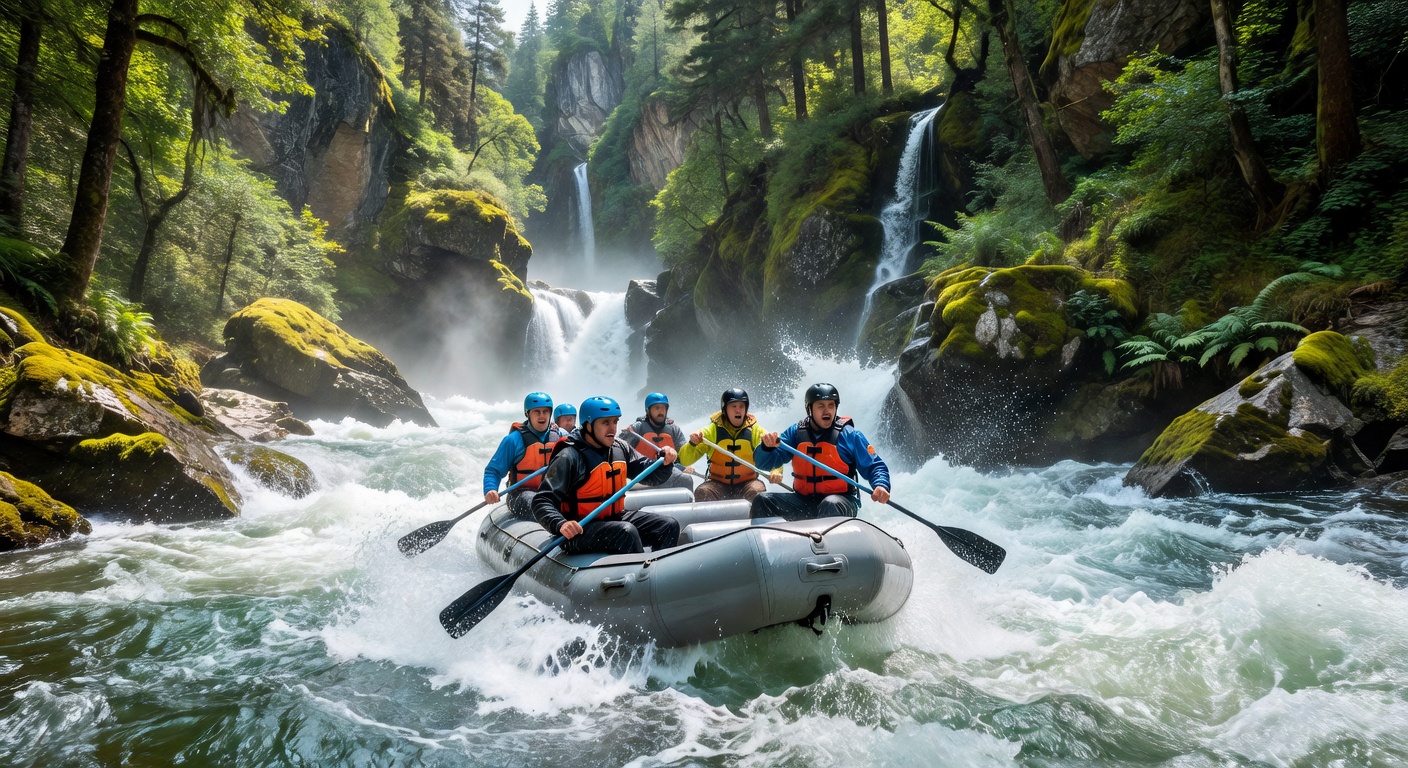
There are moments on the river that redefine your relationship with fear. You're perched at the lip of a Class V rapid, paddle locked in a forward-ferry position, water thundering through an impossibly narrow corridor of volcanic rock below. Your guide shouts something you can't hear over the roar. Then the raft pitches forward into the chaos.
That's river rafting at its finest — and it's something I've been addicted to for 15 years across rivers on five continents. In this comprehensive guide, I'm sharing everything I've learned about getting started, progressing safely, choosing the right rivers, and ultimately, how to run Class V whitewater with confidence.
🌊 What You'll Learn in This Guide
River rapid classification system · Essential gear for every level · How to read moving water · The world's best rafting rivers · Safety and self-rescue techniques · Training progression from Class I to V
Understanding the Rapid Classification System
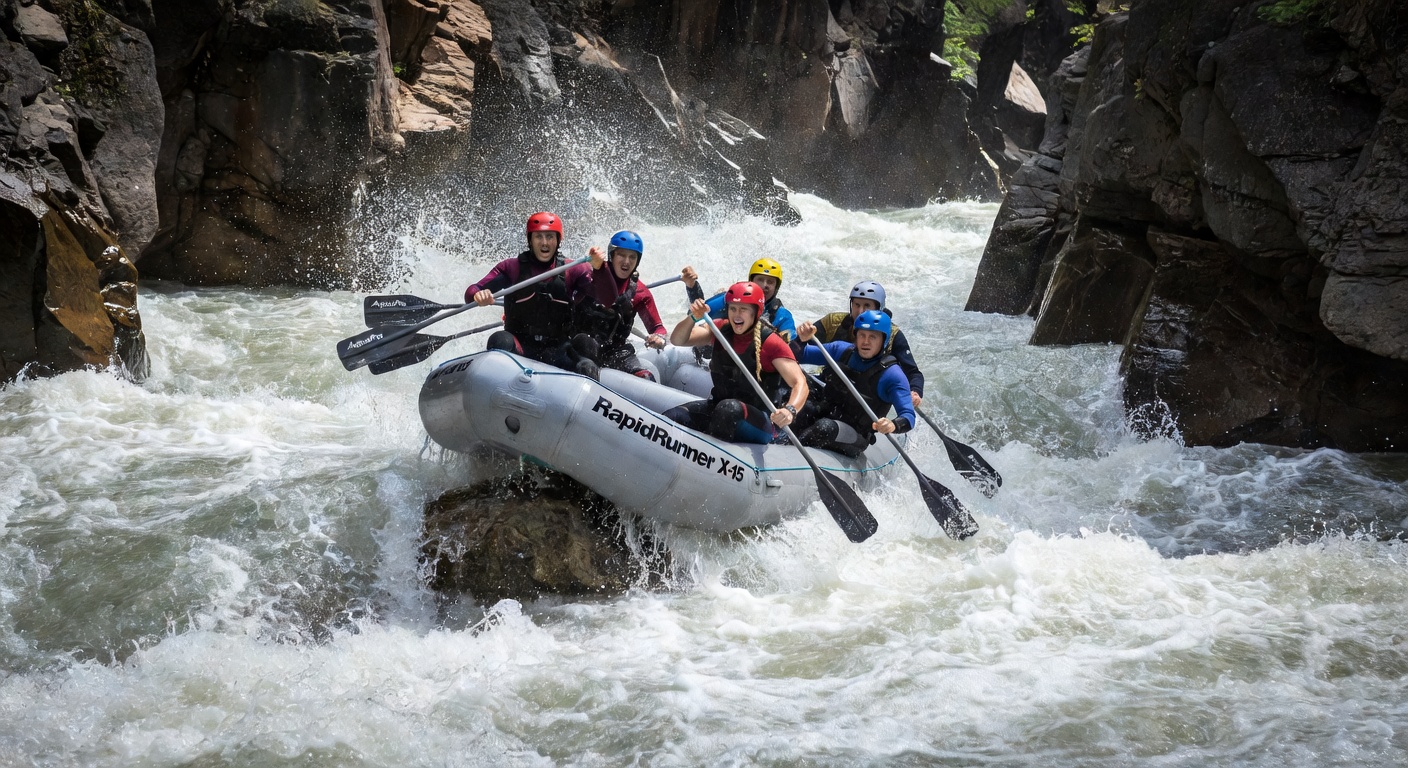
Before we talk about specific rivers, you need to understand how rapids are graded. The International Scale of River Difficulty uses Roman numerals from I to VI, and knowing what each grade means is critical for safety.
- Class I: Easy. Moving water with small waves and few obstacles. Suitable for complete beginners.
- Class II: Novice. Wide channels with simple rapids requiring basic maneuvering.
- Class III: Intermediate. Moderate, irregular waves and narrow passages. Requires experience.
- Class IV: Advanced. Intense, powerful rapids with predictable but demanding routes. Requires scouting.
- Class V: Expert. Extremely difficult, violent water with serious hazards. Rescue is difficult and injury risk is real.
- Class VI: Unrunnable. Danger to life. Do not attempt.
"The river doesn't care about your experience level. It only cares about whether you've prepared." — Marcus Hayden
Essential Gear: What You Actually Need
The gear conversation separates the weekend warrior from the serious river runner. Helmets and PFDs are non-negotiable at any level — not just recommended. Here's what I carry on every Class IV–V trip.
Safety Equipment (Non-Negotiable)
- Type V PFD (personal flotation device) rated for whitewater — not a flat-water kayak PFD
- Full-coverage whitewater helmet with ear protection for Class IV+
- Throw rope (15m minimum) for every person in the group
- Rescue knife with one-handed deployment — attached to your PFD
- Whistle and signal mirror for communication in noise environments

The World's Best River Rafting Destinations
After 15 years of river chasing, I've paddled on six continents. These are the rivers that have genuinely changed me.
Futaleufú River, Chilean Patagonia
Consistently rated among the world's top three rafting rivers. The Futaleufú (Futa) is a turquoise-blue Class IV–V torrent cutting through some of the most dramatic Patagonian scenery imaginable. Multi-day trips of 5–7 days are standard, combining serious whitewater with camp nights under Andean peaks.
Zambezi River, Zambia/Zimbabwe
Below Victoria Falls, the Zambezi offers what many call the best single-day rafting in the world. Eighteen consecutive rapids — several at Class V — compressed into a spectacular 24km gorge. The put-in is 60m below the falls lip via a steep trail. Swims are common. Big smiles are guaranteed.
Sun Kosi River, Nepal
For multi-day epics, nothing beats Nepal's Sun Kosi — a 270km traverse from the Tibetan highlands to the Ganges plain through over 70 significant rapids. Nine days in the Himalayan foothills, supported by camp crews, local cuisine, and some of the most remote river environment on Earth.
⚠️ Rapid Safety Rule #1
Always scout unknown rapids from shore before running them. No rapid is worth your life, and there is no shame in portaging around a section that exceeds your current ability. The river will always be there next season.
Progression: From Class I to Class V
No one should attempt Class V without a structured progression. Here's the training pathway I recommend to every aspiring expert paddler:
- Year 1: Complete a certified river guide course or multi-day guided Class III trip
- Year 2: Transition to self-guided Class III with swimming and rescue practice
- Year 4+: Supervised Class V attempts only, never alone, always with rescue-trained team
The paddlers who get into serious trouble on difficult rivers are almost always those who skip steps in this progression. The river will test your weaknesses ruthlessly. Build the fundamentals before chasing the adrenaline.